
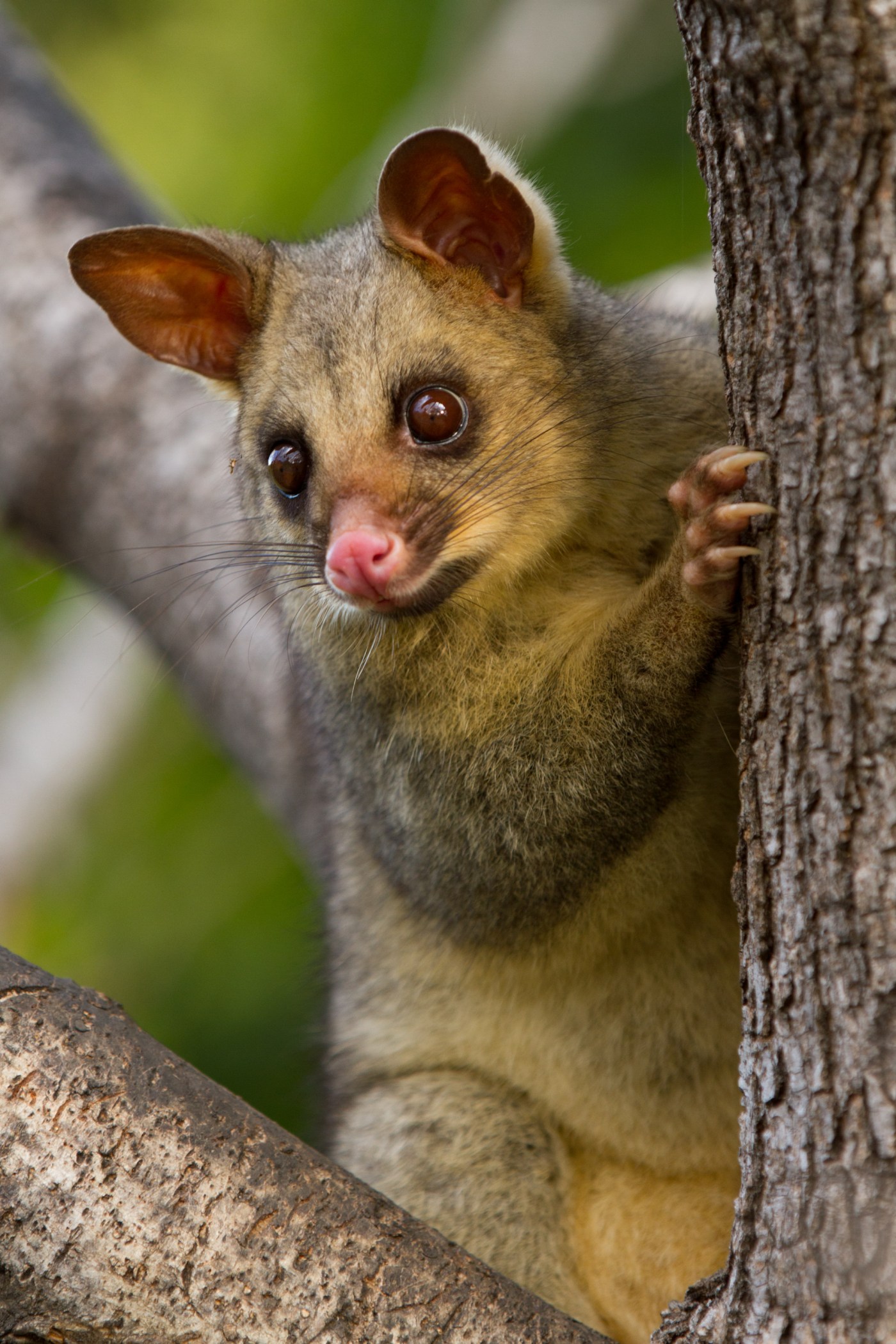
For those just arriving at this website, Framing Speciesism is a research activism blog by me, Emily Major, that explores how we ‘frame’ (or think about) nonhuman animal species. The current project focuses on framing brushtail possums in Aotearoa New Zealand, which was the subject of my doctoral research at the University of Canterbury in Christchurch, New Zealand. I have dedicated my life to serve all species of animals, particularly those who are discarded, exploited, or demonised.
My favourite book series as a child was The Berenstain Bears. I collected as many as possible and decorated my bed with the stuffed Mama Bear, Papa Bear, Sister Bear, and Brother Bear. While I didn’t know it then, these stories taught me traditional societal behaviours and expectations, and ultimately, modelled to me what a ‘perfect’ nuclear family is. As a child of divorce, these stories gave me comfort and a lifelong affinity for tree houses and talking bears.
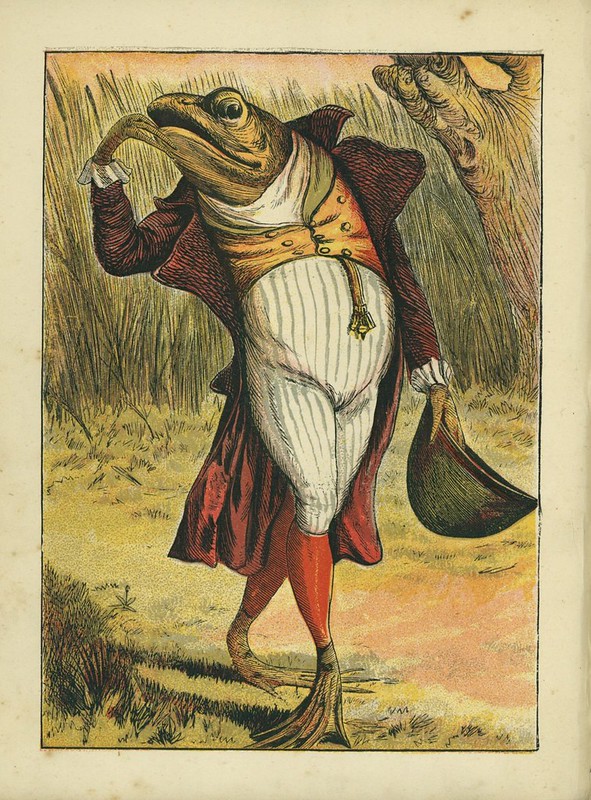
Reading books and listening to their stories plays a fundamental role in children developing their cognitive, linguistic, and learning abilities1. We learn what to do (and alternatively what not to do) through these tales. Many children’s books, such as The Berenstain Bears, use anthropomorphism to tell stories and maintain engagement by using animals. Anthropomorphism is the application of human behaviours to nonhuman objects or beings2, such as animals. Early research critiqued the use of animals in children’s books3, though the practice of using animals to tell stories is still done heavily today.

“Anthropomorphic Tea Towel Detail” by Lori L. Stalteri is licensed under CC BY 2.0.
While I am not criticising the use of animals in literature, I question how we use them – especially when they are presented in speciesist ways that can cause harm through the gross oversimplification of complicated ideas. This post introduces how possums in Aotearoa New Zealand are framed in children’s literature and questions why we should care. They’re just kid’s books right, surely they have nothing to do with the culture of cruelty that possums can face here?
I’m not so sure. This idea of examining children’s books was initially part of my doctoral research, where I intended to analyse how children’s books present possums and what stories they tell. Are the possums presented as good, bad, or neutral in the tale? What words, images, and illustrations are used in these books? What role do species play? If the book is about conservation, how do the authors and illustrators grapple with the incredibly complex topic of possums as ‘pests’?
I quickly discovered in my initial research that possums in New Zealand-specific children’s literature are often poised as the enemy or antagonist. For example, in Erin Devlin’s book, “Oh, No Mister Possum”, everything from the description and imagery presents possums negatively (see below). The back description states, “When Mister Possum and his GREEDY family refuse to change their diet of luscious New Zealand trees, a plan is hatched to return these hungry visitors to their native Australia”. The illustrations present possums as sharp-clawed, sullen-eyed menaces that lurk in the trees to pluck leaves at their leisure. The emphasis of “GREEDY” and “hungry”, in colourful bold text is contrasted against the yellow, watery font of the “luscious” trees.

‘Oh, No Mister Possum!‘

New Zealand
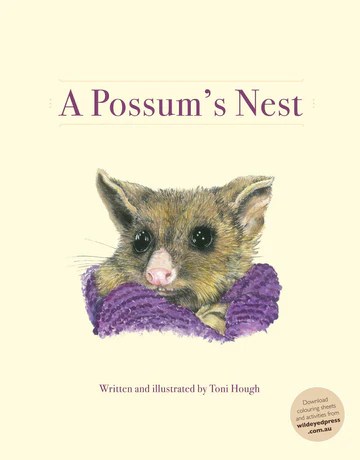
The presentation of possums here looks markedly different to Australian possum depictions, such as Toni Hough’s “A Possum’s Nest” or Mem Fox and Julie Vivas’s “Possum Magic” (see below). “The Possum’s Nest” follows Lily, a young child who finds a joey and sets out on an adventure to find the joey’s mother, meeting other Australian species along the way. “Possum Magic” is a similar tale of adventure, where a young possum, Hush, becomes invisible by the magic of Grandma Poss. The tale follows Grandma Poss and Hush through the bush to find the magical food that can visibilise Hush again. The Australian illustrations are soft, with smooth lines and warm colours. Both of these books are written and illustrated by Australian authors and illustrators, where the brushtail possum is native and protected as a species.

This short post is not intended to fully explain the intricacies of introduced species, such as possums, and ‘pest’ control in New Zealand; however, it does question how this framing of so-called ‘pest’ species in children’s books can influence negative attitudes, and eventually negative treatment, of these species. Previous research has criticised how children’s literature, despite seeming harmless or innocuous, can normalise and desensitise children to the marginalisation of nonhuman animal species4. The constant exposure to the narrative of possums as ‘pests’ can influence how children see and understand the marsupial and their state of belonging in New Zealand.
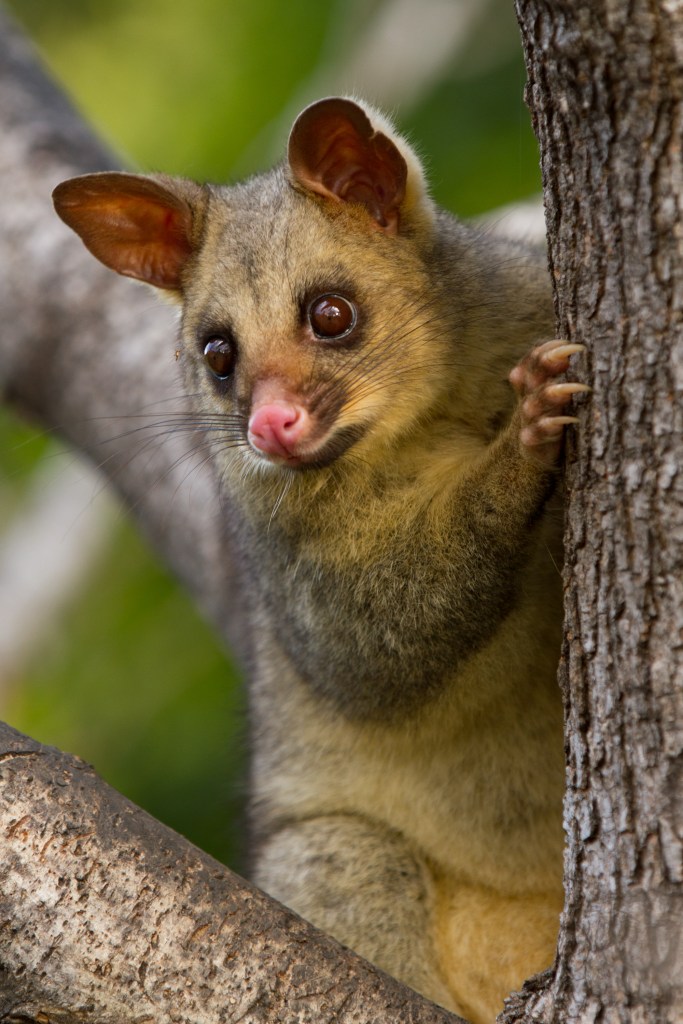
Unfortunately, specific animal species can be constructed as social problems5. In New Zealand, possums are undoubtedly one of New Zealand’s social problems. The discourse is prevalent in recent online media, such as a recent NZ Herald news article which outlined how a conservationist, seeking to sell “ungutted [possum] carcasses” for garden fertilizer, argued some Kiwis were “sleepwalking through life” by ignoring the possum problem6, or the Radio New Zealand article which outlines how a pensioner “fought back” against possums which ate her roses7. Then there are examples in children’s literature, as listed above.
While this is fodder for a much larger research project, it is clear that something is going on with how children consume conservation messaging in their books and literature. Children should learn about protecting native species and their habitats, but my criticism is how this is done. Is the current approach the best way to engage children in conservation and environmental protection? What about empathy building and learning how humans interact with and treat others – especially those deemed not to belong? I don’t have the answer, but I know this isn’t it.
References
1 Niklas, F., Cohrssen, C., & Tayler, C. (2016). The sooner, the better: Early reading to children. Sage Open, 6(4), 2158244016672715. https://doi.org/10.1177/2158244016672715
2 Morton, D. B., Burghardt, G. M., & Smith, J. A. (1990). Critical anthropomorphism, animal suffering, and the ecological context. The Hastings Center Report, 20(3), S13-S13.
3 Markowsky, J. K. (1975). Why anthropomorphism in children’s literature?. Elementary English, 52(4), 460-466. https://www.jstor.org/stable/41592646
4 Tetrault, S. (2023). The Influence of Early Childhood Media in Promoting Speciesist Ideologies. Animal Ethics Review, 3(1), 11-18. https://doi.org/10.31009/aer.2023.v3.i1.03
5 Best, J. (2018). Constructing animal species as social problems. Sociology Compass, 12(11), e12630. https://doi.org/10.1111/soc4.12630
6 Curtis, S. (2024, October 1). Northland conservationist Wayne Parsonson’s unique initiative for dead possums. NZ Herald. https://www.nzherald.co.nz/northern-advocate/news/northland-conservationists-unique-initiative-for-dead-possums/IJPHWS3FUJBJLCOUNY6OAWLOIE/
7 Rosenberg, M. (2024, November 23). Possums ate this pensioner’s roses. So she fought back. RNZ.
https://www.rnz.co.nz/news/ldr/534610/possums-ate-this-pensioner-s-roses-so-she-fought-back
Copyright © 2025 Framing Speciesism. All Rights Reserved.
Framing Speciesism will happily authorise credited reproduction of this content, given prior permission has been obtained. Please use the ‘Contact’ tab to inquire about more information.

 Framing Speciesism

Another great read, Emily.
I’m not sure if I have shared this with you, but when my husband and I briefly moved to his home in Wellington several years ago, he took me to Te Papa museum and we were both equally appalled to see the kid’s drawing activity they had set up: Design your rat trap.
The blackboard was filled with cruel ideas disguised with very cute kids art: Rats tied to balloons that say “Bye bye rat”, Rats being launched out of stick-figure cannons, an adorable hand-drawn drone with an electrocution prod. I still have the photos if you would like them.
While we both obviously understand the importance of conservation, the way NZ tries to sanitize it, cute-ify it, and turn it into a game is frankly disgusting. Most of the city rat traps were the same – if I recall, the message on them was something akin to “Enter here, rat 🙂 “. The Zealandia instagram, which is supposed to be all-ages friendly, has even posted some disturbing content about dead rats, so I’ve had to unfollow.
With all this considered, it really doesn’t surprise me that children will grow up not thinking twice when offered the chance to dunk baby possums to death in water or feel nothing when they run over an animal. A friend of my husband’s has exclaimed on numerous occasions how much he enjoys running possums over. Nothing good can come from making cruelty and death an endearing family or academic activity, and normalizing it within the culture.
I read your post about the harassment you endured when your blog was posted on Reddit NZ. For the last year I have been working with various organizations hunting down animal abusers globally. I will say a lot of the comments really resemble some of the things we see in animal abuse/torture rings and the worst comments should be saved and documented, with the usernames and URLs of the individuals saved. We tend to see some overlap between people making such statements online to animal advocates/animal lovers and actually being consumers of online animal abuse.
Good afternoon! Thank you so much for the thoughtful comment. I completely agree with you about the Design your Rat Trap “activity”. I visited Te Papa back in 2020 with the intention of using the observations from there and other places in my thesis (but then I wrote too much concerning interviews and didn’t have word count left haha). The images were absolutely disgusting. Imagine these little children writing and drawing these activities, with their parents and guardians prompting them. It’s just so disgusting in general. I am a rat lover anwyays, and while they pose a concern to some species and I understand why some species are protected, cruelty is never acceptable and for a nation that prides themselves on “empathy”, it is anything but for species such as ‘pests’.
I would very much appreciate those photos if you can find them. I have some, but didn’t take as many pictures as I would have liked. You can send them through to me directly at emilyjmajor@gmail.com and I will make sure to check with you before I use them for any project.
I appreciate your engagement and comment – thank you!