
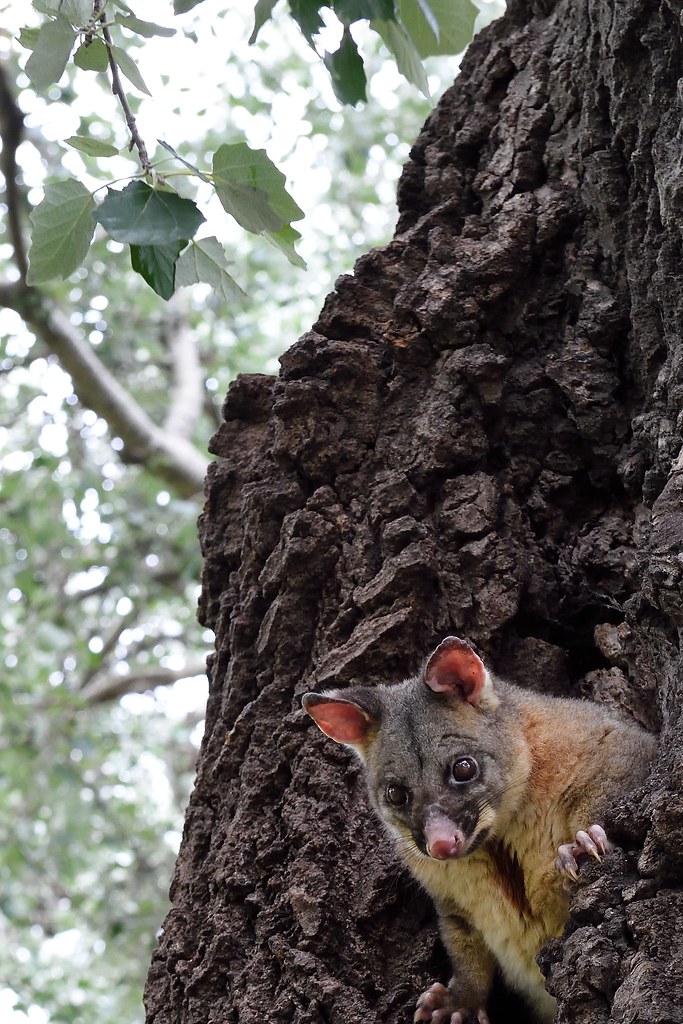
For those just arriving at this website, Framing Speciesism is a research activism blog by me, Emily Major, that explores how we ‘frame’ (or think about) nonhuman animal species. The current project focuses on framing brushtail possums in Aotearoa New Zealand, which was the subject of my doctoral research at the University of Canterbury in Christchurch, New Zealand. I have dedicated my life to serve all species of animals, particularly those who are discarded, exploited, or demonised.
While the history of possums in Aotearoa New Zealand is much more complicated than this brief overview; however, understanding their early history is important if we are to consider their contemporary framing.
Like many other species exploited for their fur, brushtail possums (herein: possums) were successfully introduced to Aotearoa New Zealand in 1858 to create a fur trade. The species, native to Australia, thrived in this new environment as they had plentiful access to food and no threats of predators (at least the nonhuman kind).

Unsurprisingly, the introduction of a new species to a place largely without other mammals, save for a few species of bats and marine mammals[1], had a series of knock-on effects on the ecosystem. This is a tale replicated in many places and in many contexts around the globe and tends to not end well for most parties involved.
This initial introduction of possums was regarded as a ‘liberation’[2] and was seen by various stakeholders as very positive for New Zealand’s economy, particularly as the rough terrain of the mountains was difficult to monetise. The Forest Service, which eventually merged with other departments to become the nation’s Department of Conservation, was “greatly in favour” of their introduction[3]. This early sentiment led to possums being legally protected in the Animals Protection Act of the 1890s. For a short period of time, possums were proof that money can grow in trees.
However, by the mid-1950s, appreciation for possums waned. The species was officially declared by the Noxious Animals Act as a “noxious animal” (along with some wild deer, goat, and pig species). This declaration meant these animals could be kept in a captive setting but were barred from living in the wild where it was much more difficult to control them and their impacts. The possum fur trade continued, though instead of only being valued for its benefit to the economy, it was also linked as an activity that could benefit native species and the environment.

The concept of possums as ‘pests’ ramped up with ‘pest’ control and possum experimentation becoming much more prevalent. The New Zealand government, in an effort to reduce possum populations, created a bounty scheme where hunters were reimbursed per tail they supplied. The scheme, while bringing in 8.2 million possum tails, ended up not being as successful as it was originally intended as the possums which were most likely to be caught were from areas that were easily accessible, such as city limits and urban-peripheral regions – and not the remote regions which were seen as the most at-risk of possum foraging[4].
Disdain for possums grew throughout the 1960s as the rise of environmentalism saw a societal shift in what species were valued (and which ones were not). Though possums were already disliked by this point, the realisation in the 1980s that possums were vectors of the bovine tuberculosis (Tb) signalled sudden shift in attitudes. Bovine Tb was a significant threat to the nation’s multibillion-dollar economies that relied on stable international trade of its dairy and beef[5].
Soon after possums were linked to bovine Tb, the government began sharing reports and grainy images as proof that possums predate on endangered species of birds and their eggs; however, possums are arboreal folivores that have a digestive system similar to that of horses. They use hindgut fermentation that is specifically designed for breaking down significant amounts of fibrous material[6]. Critical Animal Studies scholar, Dr Annie Potts, has critiqued that this shift in possum attitudes was more a “propaganda campaign” [7] by New Zealand’s primary industries who were more interested in protecting the economy than native species.
It is important to state that this is not to say that a sick or starving possum would not show potential interest in a bird or their eggs, but that this is extremely rare behaviour and not normal for the species[8]. However, reports funded by organisations such as the Department of Conservation[9], Manaaki Whenua | Landcare Research[10], and Predator Free NZ[11], consistently state otherwise (and will be the focus of another blog post that examines the background of this).
The hatred of possums culminated with the creation of the Predator Free 2050 campaign in 2016[12]. The campaign was a national commitment to completely eradicate the “Big Three” predators (rats, stoats, and possums) by the year 2050. While many scholars and researchers see this campaign as an impossible task to realistically achieve[13], the target remains squarely focused on possums.

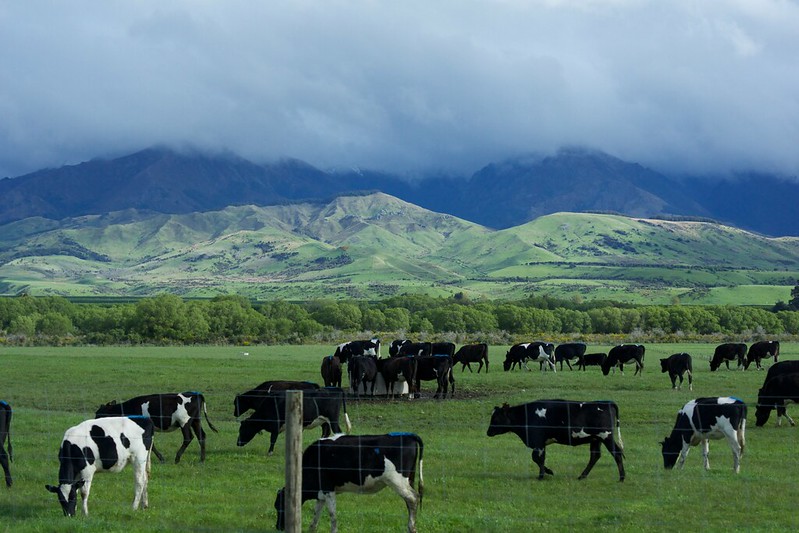
Speciesism played an integral role in the forming of these values as this environmentalism was highly selective towards specific ‘pest’ species and ignored the array of non-native species, such as sheep and cows, which lived in the fenced paddocks of agricultural farmland (which are additionally sown with non-native grasses and controversially fertilised with “blood phosphate” from Morocco[14]). New Zealand’s “clean, green brand”, for which the nation markets itself to the world, is built off a history of speciesism, for which possums are one piece of the puzzle.
If any of this interests you, subscribe to this blog and you will be able to receive new posts as soon as they get published. I appreciate your time and readership!
REFERENCES
[1] Department of Conservation. (n.d.). Native animals. https://www.doc.govt.nz/nature/native-animals/
[2] Ritchie, J. (2000). Possum: Everybody’s problem. Department of Conservation.
[3] Druett, J. (1983). Exotic intruders: The introduction of plants and animals into New Zealand. Heinemann.
[4] Parliamentary Commissioner for the Environment. (1994). Possum management in New Zealand. https://www.pce.parliament.nz/media/pdfs/Possum_Management_1994_report.pdf
[5] Ministry of Primary Industries. (2023, June). Situation and Outlook for Primary Industries. https://www.mpi.govt.nz/dmsdocument/57298-Situation-and-Outlook-for-Primary-Industries-SOPI-June-2023
[6] Carboni, D., & Tully Jr, T. N. (2009). Marsupials. In Manual of exotic pet practice (pp. 299-325). WB Saunders.
[7] Potts, A. (2013). Kiwis against possums. In A. Potts, P. Armstrong, & D. Brown (Eds.), A New Zealand book of beasts (pp. 201-225). Auckland University Press.
[8] Sweetapple, P. J., & Nugent, G. (2007). Ship rat demography and diet following possum control in a mixed podocarp—hardwood forest. New Zealand Journal of Ecology, 31(2), 186-201. https://www.jstor.org/stable/24058144
[9] Department of Conservation. (n.d.-f). Everybody’s possum: A pest of plague proportions. https://www.doc.govt.nz/documents/science-and-technical/everybodyspossum.pdf
[10] Manaaki Whenua | Landcare Research. (2020, December 12). Eradicating the last 5%. https://www.landcareresearch.co.nz/publications/innovation-stories/innovation-articles/eradicating-the-last-5/
[11] Predator Free NZ. (n.d.). Possum facts and control tips. https://predatorfreenz.org/toolkits/know-your-target-predators/possum-facts-and-control-tips/
[12] New Zealand Government. (2016, July 16). New Zealand to be Predator Free by 2050. https://www.beehive.govt.nz/release/new-zealand-be-predator-free-2050
[13] Linklater, W., & Steer, J. (2018). Predator Free 2050: A flawed conservation policy displaces higher priorities and better, evidence‐based alternatives. Conservation Letters, 11(6), e12593
[14] Samaha, A. (2020, November 19). How ‘blood phosphate’ has made New Zealand complicit in a foreign war. The Spinoff. https://thespinoff.co.nz/society/19-11-2020/how-blood-phosphate-has-made-new-zealand-complicit-in-a-foreign-war
Copyright © 2025 Framing Speciesism. All Rights Reserved.
Framing Speciesism will happily authorise credited reproduction of this content, given prior permission has been obtained. Please use the ‘Contact’ tab to inquire about more information.

 Framing Speciesism
This is a brilliant article thanks Emily!