For those just arriving at this website, Framing Speciesism is a research activism blog by me, Emily Major, that explores how we ‘frame’ (or think about) nonhuman animal species. The current project focuses on framing brushtail possums in Aotearoa New Zealand, which was the subject of my doctoral research at the University of Canterbury in Christchurch, New Zealand. I have dedicated my life to serve all species of animals, particularly those who are discarded, exploited, or demonised.
I had a conversation the other day about why I always use intentional apostrophes when writing the word ‘pest’. For me, ‘pest’ designates how society plays a role in the construction of labels towards introduced species. This concept of social constructionism has been referenced in previous blog posts, but is useful to unpack further for this discussion.
The theory of social constructionism stems from Vygotsky’s social learning theory called social constructivism1. Social constructivism argues that individuals in society actively contribute to the creation of shared knowledge. As such, different societies will have different understandings of knowledge. What they hold to be true does not necessarily mean these beliefs will be mirrored elsewhere.
In etymology (where etymon means “origin of a word”2, and the suffix –ology means “a branch of knowledge”3), the word ‘pest’ was first used in the 15th Century. Its origins are from the French word, peste (like a plague or disease), and the Latin word, pestis (a curse or deadly contagion)4. However, after the 17th century, ‘pest’ denoted “any noxious, destructive, or troublesome person or thing”4. This is the most common definition of the word today.
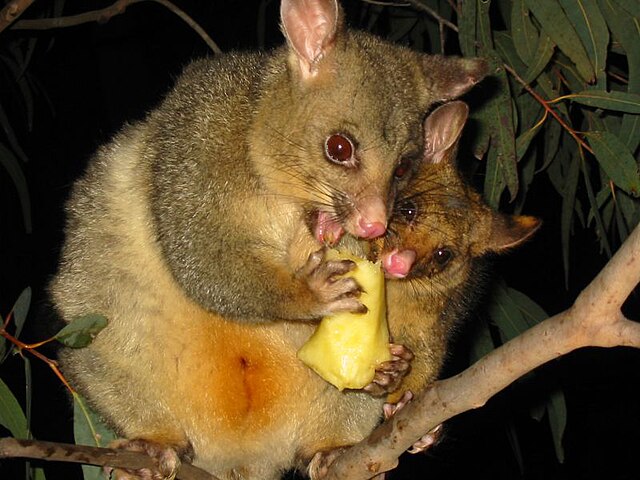
A ‘pest’ is something that, or someone who, is destructive and unwanted in the context of that particular place and time. Referencing something or someone as a ‘pest’ is entirely subjective. In the case of possums, not all possums are ‘pests’ – it depends. For example, in Australia, possums are respected and valued as native animals and are “among Australia’s best loved residents”5. They contribute positively to the uniqueness of the nation and are legally protected from harm (though they are sometimes considered a nuisance for their love of roses and orchard fruits and nesting in attics or roofs). For possums in New Zealand, they are non-native, difficult to control, and are not assigned worth (beyond the value ascribed to their flesh and fur)6. This intersection causes possums to be labelled as ‘pests’.
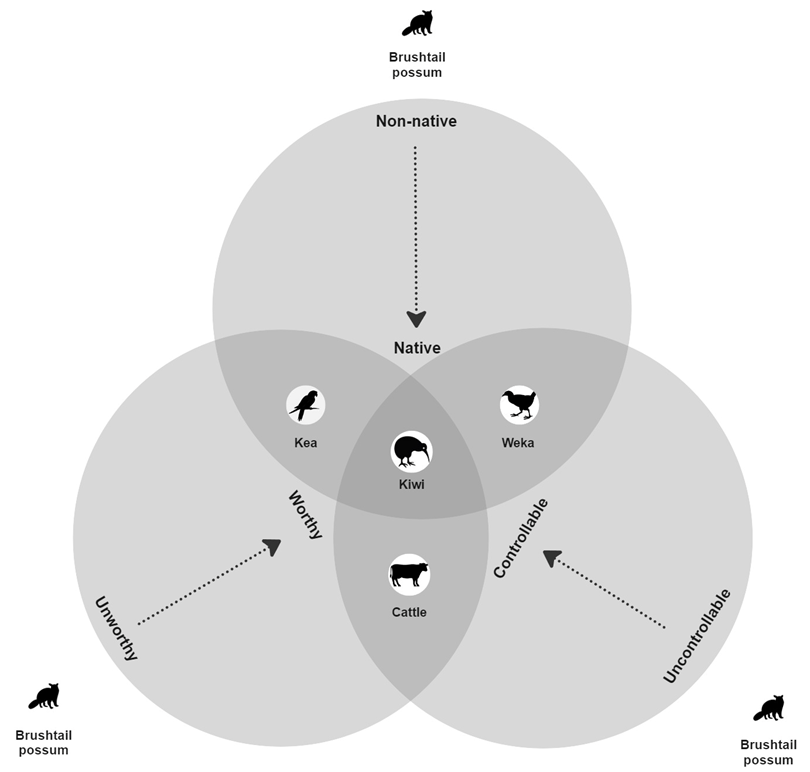
In an upcoming journal article, I created a species belonging diagram (see below) that illustrates how species are afforded belonging in the context of ‘mainstream’ Pākehā (New Zealander of European descent) attitudes to possums in New Zealand. Please keep in mind this chart was created out of knowledge gained from my dissertation7 and that the reference to these views as ‘mainstream’ is not intended to marginalise Māori perspectives on the environment, but to instead recognise the colonial impacts from these attitudes.
Image Credit: Emily Major When the article is available online, a link will be posted in the publications section of this blog.
The diagram includes a series of three overlapping circles, with each representing a key human-defined value: nativity status, ease of controllability, and worthiness. These values are defined in more detail in the article, but it is important to remember these concepts are fluid, heavily anthropocentric (human-defined), and are subject to change. Each circle operates like a gradient, where the closer the animal resides to the centre, the more that value they are ascribed by humans. The peripheral position of possums outside of these three circles reinforces that they do not belong – and, as such, are ‘pests’. This view of possums as ‘pests’ is a social construct as human society creates these notions of what (or who) is valuable, and why.
To summarise, this deliberate notion of ‘pests’ is intentional as I seek to use anti-speciesist8 language and grammar where I can. To be anti-speciesist, I seek to reduce bias against animal species. As such, these apostrophes signal that this understanding is dependent on context and is culturally defined by factors such as time, place, and geography. And to be honest, I am sure that there are those out there who would call me a ‘pest’ for hammering on about the rights and mistreatment of possums – for which, I take that as a compliment!
References
1 Prawat, R. S. (1999). Social constructivism and the process‐content distinction as viewed by Vygotsky and the pragmatists. Mind, Culture, and Activity, 6(4), 255-273.
6 Major, E. (forthcoming). Brushtail possums and species-inclusive social work in Aotearoa New Zealand [Manuscript accepted for publication – in editing phase]. Aotearoa New Zealand Social Work Journal.
7 Major, E. (2023). ‘Possums are as kiwi as fish and chips’: possum advocacy and the potential for compassionate conservation in Aotearoa New Zealand [Doctoral thesis, University of Canterbury]. UC Research Repository. http://dx.doi.org/10.26021/14756
Framing Speciesism will happily authorise credited reproduction of this content, given prior permission has been obtained. Please use the ‘Contact’ tab to inquire about more information.
You are definitely a kindred spirit. My dissertation focused on including those species that we have left out of our circle of care. I use the pigeon, opossum, and rat to represent all such so called pest species. It is called A Communion with Otherness: Enlarging the Circle of Community it is published in Open Source or I can send it to you if interested. Blessings for you and the work! Joanne Lauck
Joanne, you so much for the support! I really appreciate the time you took to message and read through this. I’m definitely looking up your thesis – I am a self-obsessed rat mum and need to read what you’ve done!
I love rats too I had a rat found in a park as an answer/sign from the universe. It was my first rat. Companion named Loki but not my last
Well done, Emily. The fact that you overcame the opposition to complete your PhD on this thesis, is a sign of hope for New Zealand. Perhaps. You state that speciesism is formed from “human-defined value” but I would argue these views are in fact more the symptom of decades of BigChem propaganda. Thank you for being so resilient to the corporate playbook.
Thank you so much for reading – I really appreciate the support. In the case of New Zealand, I completely agree that speciesism is definitely influenced by industry – all forms of it. It’s everywhere!



 Framing Speciesism
_2.jpg)
You are definitely a kindred spirit. My dissertation focused on including those species that we have left out of our circle of care. I use the pigeon, opossum, and rat to represent all such so called pest species. It is called A Communion with Otherness: Enlarging the Circle of Community it is published in Open Source or I can send it to you if interested. Blessings for you and the work! Joanne Lauck
Joanne, you so much for the support! I really appreciate the time you took to message and read through this. I’m definitely looking up your thesis – I am a self-obsessed rat mum and need to read what you’ve done!
I love rats too I had a rat found in a park as an answer/sign from the universe. It was my first rat. Companion named Loki but not my last
Well done, Emily. The fact that you overcame the opposition to complete your PhD on this thesis, is a sign of hope for New Zealand. Perhaps. You state that speciesism is formed from “human-defined value” but I would argue these views are in fact more the symptom of decades of BigChem propaganda. Thank you for being so resilient to the corporate playbook.
Thank you so much for reading – I really appreciate the support. In the case of New Zealand, I completely agree that speciesism is definitely influenced by industry – all forms of it. It’s everywhere!