

For those just arriving at this website, Framing Speciesism is a research activism blog by me, Emily Major, that explores how we ‘frame’ (or think about) nonhuman animal species. The current project focuses on framing brushtail possums in Aotearoa New Zealand, which was the subject of my doctoral research at the University of Canterbury in Christchurch, New Zealand. I have dedicated my life to serve all species of animals, particularly those who are discarded, exploited, or demonised.
Typically, I exercise caution about who I speak with publicly as interviews can be edited in ways that denigrate the topic for the sake of circulation or public interest. I want to ensure that I have some control over the information being shared if I am directly affiliated. Six months ago I was lucky enough to be interviewed by Dr Marc Bekoff for his column on Psychology Today1 (pinch me!). Psychology Today is a popular online media organisation that reports on research regarding human behaviour and psychology. I knew that, by being interviewed in this US-based forum, my research would have the potential to reach a global audience. This spread is great for raising awareness and sharing my ideas. However, I had to prepare myself for the possibility that the New Zealand media would pick up the story and do what the media can sometimes do (e.g., pick up juicy soundbites and misconstrue them as something else). I took the risk.
While my initial concerns were with the media picking up the article and misrepresenting it, I found out through the most innocuous way (doom-scrolling through Reddit on my lunch break) that my article was shared on the platform’s subreddit, r/newzealand. Unsurprisingly, the post and most of its comments were brutal – and completely missed the point of my thesis. As I frustratingly flicked through the comments and felt my heart booming out of my chest (yes, I read them, and no, I shouldn’t have), I realised none read my entire thesis – or even the abstract. I didn’t expect them to, but if they were to make assumptions, at least understand what you’re commenting on first. Perhaps that is just fodder for Online Trolling 101.
The comments joked and mocked my work, with some people sharing that they, in response, would hunt or trap possums more (akin to how carnists, in response to someone saying they are vegan, will say they’ll eat more meat to offset the vegan’s saving of animal lives). I have reflected on this in the past few months and it has got me thinking about the power of social policing on controversial topics, such as this. For me, advocating for compassion for possums in New Zealand is not controversial, despite being framed as so.

Social policing, which is different from the policing profession, refers more to the unwritten community-level monitoring that individuals, as citizens of a nation, take part in. Social order is partially maintained through interactions between these everyday citizens. They ensure each person follows the assumed rules and regulations, or social norms, of that group or society2. A good example is how mask-wearing and social distancing were socially enforced during the COVID-19 global pandemic. Through their interactions in public spaces, people mutually reinforced these expectations that others should properly wear a mask and maintain distance between one another in enclosed spaces. If someone got too close to you, in the grocery store for example, you would ‘police’ them by reminding them to keep their distance or mask up if they openly coughed. This is not to say that every person in a society would have acted like this, but that the social dominance of these attitudes would have made it abnormal to act another way in public.
This social policing happens everywhere, all the time, and is very prevalent in the example of ‘pest’ control in New Zealand. For example, when I gave guest lectures to undergraduate students on the sociological understanding of violence across species in society, part of the lecture discussed my research as a case study. The point of the lecture was that violence to animals can sometimes be framed as not violence (or as less violent, depending on the species). Over the years, I noticed a pattern in how some students acted during these lectures, with some laughing, mocking, or joking about the images which depicted possum cruelty. Their behaviour, which can be understood as a strange form of speciesist humour3, included verbal and physical cues that intentionally distracted those around them, signalling to their peers that what was being discussed was out of the ordinary – an unwelcome topic that they, too, should disagree with.
My position as a Critical Animal Studies scholar, which is a field that advocates for the abolishment of oppression, domination, injustice, and ostracisation for all sentient beings, means that it is important to recognise social justice is not only a human issue but a nonhuman animal and sentient being issue, too4. The course, while typically geared towards Human Services and Sociology students, has much overlap with a Critical Animal Studies viewpoint, only if you dare to consider nonhuman animals (and other sentient beings) as victims of violence.
After gaining more experience in public speaking and lecturing, I realised what was happening in the room during these talks – I was witnessing social policing in action. People, who disagreed with what I was arguing during the lecture, actively countered these ideas and sought to trivialise the concepts and terms I sought to educate them on. While not everyone has to support and agree with these concepts, basic respect between the speaker and listener is expected when sitting in on a lecture. This was telling for me as the very purpose of this lecture was to introduce to first-year students that violence can be more than just an act by one (human) person towards another – it transcends species and can often be species-specific5.
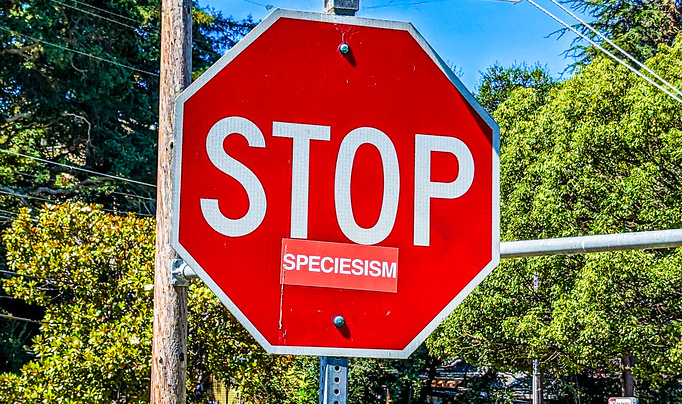
Year after year, I noticed that the behaviours in the theatre reflected societal discomfort in openly discussing this controversial topic. If I saw people laughing or joking about the killing of possums, I paused the lecture and asked everyone to look at the people around them. I asked, How are they behaving in response to this lecture material? Would they act the same way if this lecture was discussing domestic abuse or family violence? What about if this lecture was about cruelty towards a dog or cat?

It is important to address that social policing plays a role in our attitudes towards animals – and possums, in this case. The framing of these beings is being actively reinforced day in and out. While I have no control over the thread on the r/newzealand subreddit and cannot engage with commenters as I would students in the theatre, it has made me consider the impact social policing has on the discussion of controversial topics – on screen or in person. The nature of these topics can suppress discussions about why we think the way we do and how we learn our unique perspectives. Broaching the topic that speciesism is a social justice issue can be uncomfortable for some, but if anything, we need discomfort if we dare seek to make the world a better place.
REFERENCES
1 Bekoff, M. (2023, November 26). Is There Hope for Ending New Zealand’s War on Possums? Psychology Today. https://www.psychologytoday.com/nz/blog/animal-emotions/202311/is-there-hope-for-ending-new-zealands-war-on-possums
2 Bicchieri, C., Muldoon, R., & Sontuoso, A., (2023). “Social Norms”. The Stanford Encyclopedia of Philosophy. https://plato.stanford.edu/archives/win2023/entries/social-norms
3 Rivas, T. (n.d.). Laughing at Animals: Humour at the Expense of Animals. Animal Freedom. https://animalfreedom.org/english/column/laughing-at-animals.html
4 Jones, R. C. (2015). Animal rights is a social justice issue. Contemporary Justice Review, 18(4), 467-482.
5 Cudworth, E. (2015). Killing animals: Sociology, species relations and institutionalized violence. The Sociological Review, 63(1), 1-18. https://doi.org/10.1111/1467-954X.12222
Copyright © 2025 Framing Speciesism. All Rights Reserved.
Framing Speciesism will happily authorise credited reproduction of this content, given prior permission has been obtained. Please use the ‘Contact’ tab to inquire about more information.

 Framing Speciesism
Great 👍 Emily!
Ngā mihi nui
Nā Ken
Great work, Emily. Thank you for being so courageous and patient. One thing you haven’t mentioned here (and I know you do in your thesis), is the root cause of this social policing. The thing is, even in Nazi Germany, the social policing was done by the citizens themselves, they ‘snitched’ on one another because they had undergone 6+ years of military propaganda and censorship about the ‘disease-ridden’ outgroup vs their own ‘elite’ race. For the sake of your own sanity, I’d suggest staying well away from any legacy media or [anti]social media! After 70 years of NZs toxic poisoning – psychological and physiological – there are places, like Omelas, where we just have to walk away. https://informedheart.substack.com/p/environmental-fascism-why-nz-propaganda?r=q9aq0
Definitely! Thank you, Ursula! I’ve been considering writing another research article about this… so it’s on the radar! ♥