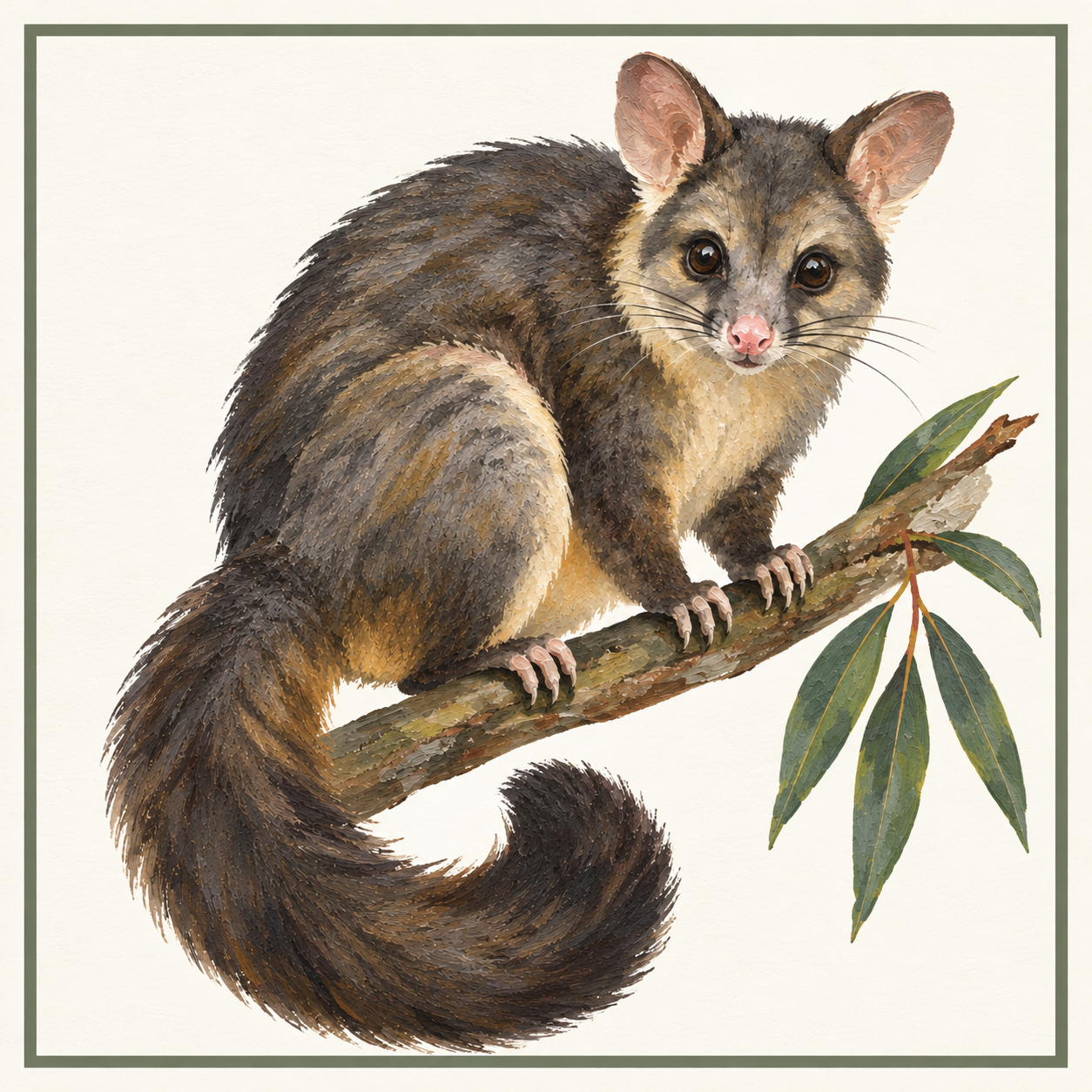
For those just arriving at this website, Framing Speciesism is a research activism blog that explores how we ‘frame’ (or think about) nonhuman animal species. Beginning with my doctoral research on brushtail possums in Aotearoa New Zealand, my work has since expanded to include a wider breadth of species, particularly those labelled as ‘pests’, ‘invasive’, or ‘unwanted’. I am developing Critical Pest Studies, an emerging subfield of Critical Animal Studies that examines how these labels are socially and politically constructed and how they shape public attitudes, policy, and the treatment of animals. Through this work, I challenge the narratives that justify the persecution of certain species and dedicate my research activism to serving animals of all kinds, particularly those who are discarded, exploited, or demonized.
June 1, 2026
Since moving home to Canada in early 2025, I have been wondering where to go next and how to pivot not only my career, but my activism. I will forever advocate for possums and their plight in New Zealand; however, the situational and geographic transition back home to Canada has made me think much more about the international applicability of the concepts and ideas I explore regarding possums. This recognition of patterns of mistreatment for ‘pests’ feels like a natural progression of my existing work.
Over the past year, I have been quietly developing the term “Critical Pest Studies”, which is nestled under the field of Critical Animal Studies. A good friend and colleague of mine, Zoei Sutton, inspired me through her Critical Pet Studies PhD-thesis-turned book (which you can order here), and bam, lightbulb moment for me. These were already ideas I was toying with, but at the time, I didn’t have a sufficient term to encapsulate what I was really trying to say.
This work extends the ethical and theoretical commitments of Critical Animal Studies into a space that is uncomfortable for many to approach: ‘pests’ and so-called nuisance species. I first encountered this during data collection for my PhD thesis, where I assumed that people I spoke with, who were within the New Zealand vegan animal rights community, would, on the whole, be receptive to my position to advocate for possums. As it turned out, the ‘pest’ label made many people uncomfortable, and some of those who advocated for vegan diets and animal liberation drew a line that excluded ‘pests’. At the time, this was very confusing to me, though it planted the early seed of thought that is now Critical Pest Studies.
This post serves as a brief introduction to the emerging field as I begin to formally outline its scope, concerns, and theoretical interventions. This also marks an expansion of the Framing Speciesism blog, which is growing to include this new strand of work. After all, this blog’s purpose is to frame speciesism in action, and the way that ‘pests’ are treated is a very contextual area of speciesism. There are a series of forthcoming peer-reviewed publications where I develop these arguments in greater depth than this post, but the aim here is to briefly outline some foundational questions that inspire this developing area of inquiry.
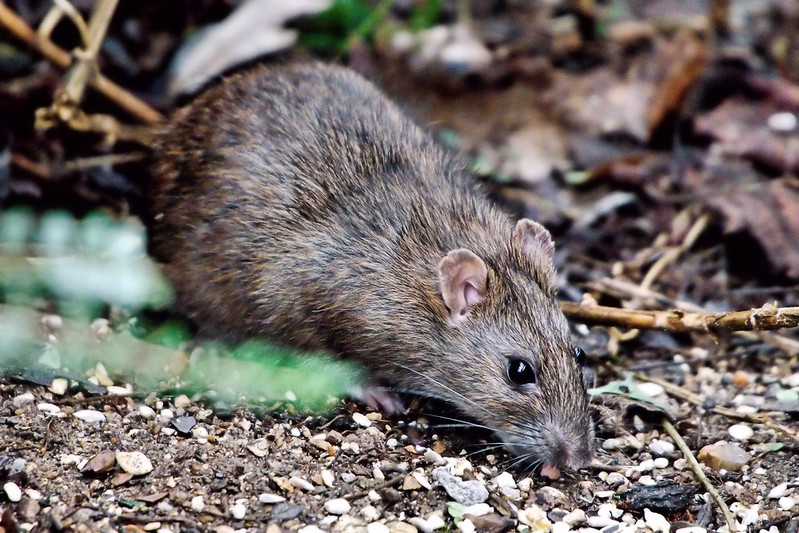
At its core, Critical Pest Studies examines how certain animals come to be designated as ‘pests’, ‘invasive’, or ‘unwanted’, and how these classifications shape how they are governed, controlled, and targeted/exterminated. Rather than treating ‘pest’ status as a biological or ecological fact, the field argues that it is a cultural and political construction. Species such as possums, rats, pigeons, foxes, insects, and introduced mammals, etc., are often framed as threats to agriculture, public health, infrastructure, or biodiversity. They are ‘pests’ because they threaten human interests. Critical Pest Studies asks how these framings are produced, circulated, and normalized, and what forms of violence they authorize by human beings towards these ‘pests’.
It pays particular attention to how language, policy, and scientific discourse converge to render certain lives killable (as opposed to liveable). Once an animal is labelled a ‘pest’, a wide range of interventions (poisoning, trapping, genetic engineering, habitat destruction, and large-scale culling, etc.), become not only permissible but framed as responsible environmental management. These actions are expected and justified. One of the central concerns of Critical Pest Studies is to interrogate how this legitimacy is constructed and sustained over time. Going beyond the impacts on the animals deemed ‘pests’, what do these narratives do to other species of animals, the people who participate in ‘pest’ control, or wider society? Are there impacts on empathy development, particularly for children who learn these simplified discourses of ‘good’ versus ‘bad’ animals, and are guided towards what kind of treatment is normal in response? Critical Pest Studies is more than just theory, but theory in action and with purpose.
A further focus of the field is the role of affect and representation. Animals categorized as ‘pests’ are frequently associated with disgust, fear, contamination, and excess. These emotional and symbolic associations are not incidental; they actively shape public consent for control measures. Critical Pest Studies explores how ‘pest’ animals are culturally produced as boundary violations (including ecological, moral, political, and aesthetic), and how these narratives reinforce broader assumptions about purity, order, and belonging. These very ideas are explored in an upcoming article of mine (due to be officially published in mid-June 2026), which argues how these folkloric representations of animals as cultural ‘boogeymen’ can incite real violence towards animals.
The field is also attentive to the ways in which ‘pest’ discourse obscures human responsibility. Urban expansion, industrial agriculture, waste production, and ecological disruption are often central to the emergence of human-animal conflict, yet these structural conditions are frequently backgrounded in favour of narratives that individualize and demonize particular species. My current conception of Critical Pest Studies asks how attention might be redirected toward the systems that generate these conflicts, rather than solely toward the animals caught within them.
Critical Pest Studies is also informed by intersectional approaches that examine the links between human and animal oppression. Building on Critical Animal Studies, this subfield I am proposing explores how narratives of invasion, contamination, overpopulation, and disposability have been used to justify violence against both nonhuman animals and marginalized human groups. While recognizing the distinct experiences of different forms of oppression, Critical Pest Studies investigates how similar logics of othering and exclusion operate across species boundaries and contribute to broader systems of injustice that can bleed into human society. If we can see connections between the abuse of humans and animals, then how this abuse materializes for ‘pests’, specifically, is important to interrogate.
Methodologically, the field draws on Critical Animal Studies, environmental humanities, cultural geography, sociology, and media and communication studies. It analyzes policy frameworks, media representations, scientific research, and conservation campaigns to trace how ‘pest’ categories are constructed and mobilized across institutional settings. It also remains attentive to the material consequences of these categories, particularly the scale of suffering and killing they enable.
Importantly, Critical Pest Studies is not a call for simplistic preservationism or the denial of ecological complexity. Rather, it is an invitation to rethink socially encultured assumptions about disposability and to consider more ethically nuanced and context-sensitive approaches to coexistence. This includes reimagining urban and environmental design in ways that reduce conflict without defaulting to extermination logic.
The field engages critically with conservation narratives that frame invasive or non-native species as existential threats requiring militarized responses. While recognizing ecological change and the challenges of biodiversity loss, Critical Pest Studies questions whether eradication and control are the only available responses, or whether alternative frameworks, such as compassionate conservation, grounded in harm reduction and coexistence, might be possible. This idea of Critical Pest Studies builds upon the scaffolding of decades of feminist and critical theory that paved the way for its development.
This introductory post marks the beginning of a developing research agenda and the expansion of the Framing Speciesism blog into this adjacent but arguably distinct area of inquiry. How Critical Pest Studies will develop over time will be responsive to further development and inquiry, though this, I believe, is a good start.
Copyright © 2026 Framing Speciesism. All Rights Reserved.
Framing Speciesism will happily authorize credited reproduction of this content. Please use the ‘Contact’ tab if you have any questions.



wonderful work Emily!
Ken from NZ